



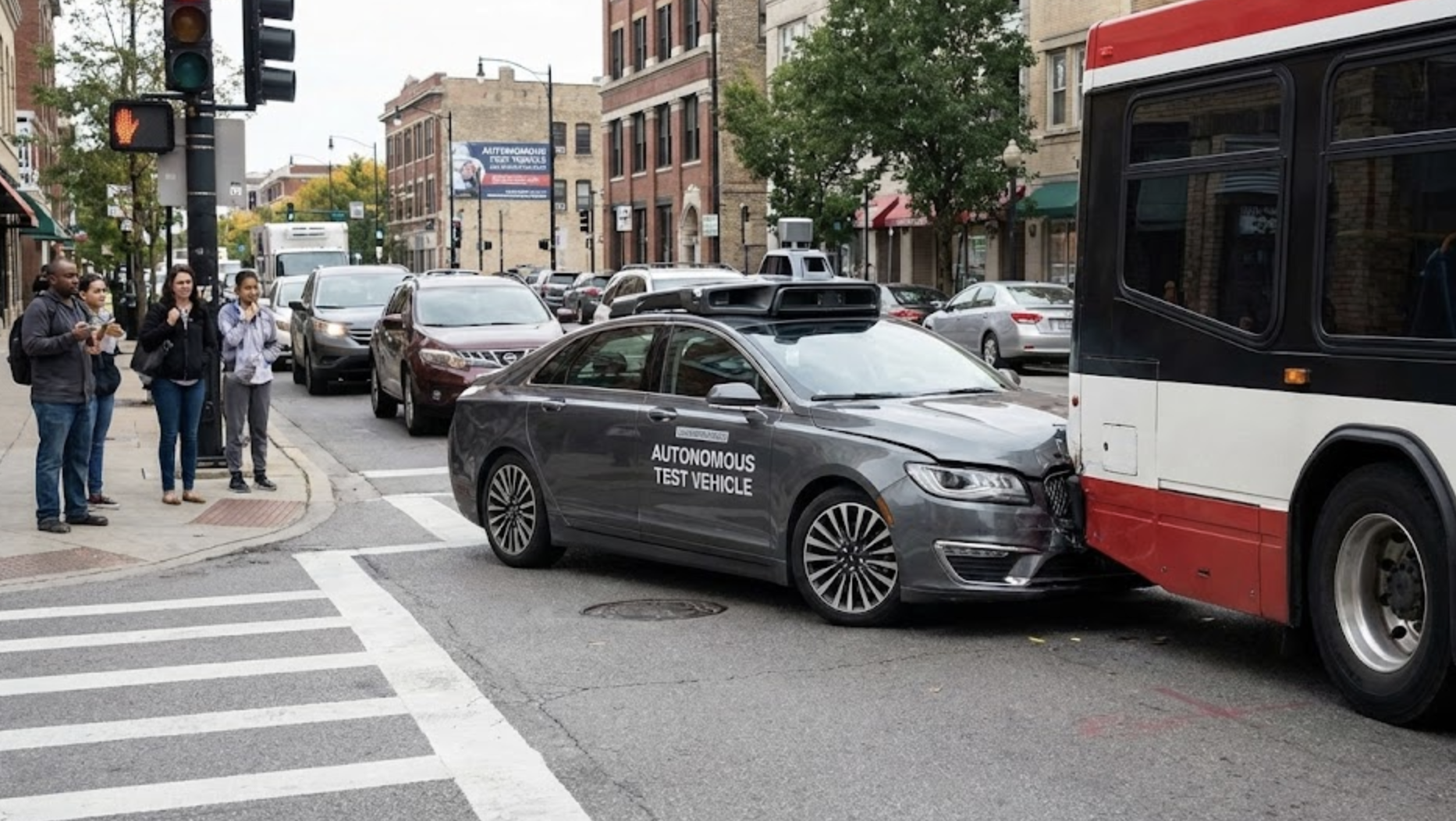
The Paradox of Self-Driving Safety: Why Fewer Crashes Might Soon Cost More
The promise of autonomous vehicles (AVs) is seductive: a world with drastically reduced road fatalities, where human error—the cause of over 90% of accidents—is engineered out of existence. We are moving toward a future where our cars are infinitely more attentive, patient, and rule-abiding than we are.
But we aren’t there yet. And the road between "here" and "there" is going to be bumpy, expensive, and incredibly complex for the insurance industry.
We are entering the "transitionary era"—a period that could last decades—where robot drivers will share the road with unpredictable human drivers, cyclists, and pedestrians. This mixed-traffic environment creates a new paradigm of risk that insurers must rapidly prepare for.
The High Cost of a Fender Bender: The first major hurdle is financial. While AVs may eventually reduce the frequency of accidents, they are already dramatically increasing the severity of repair costs.
A minor fender-bender today might require a new bumper and some paint. In an AV, that same bumper is packed with LIDAR sensors, radar arrays, cameras, and ultrasonic emitters. A low-speed impact that used to cost $800 to repair can easily become an $8,000 calibration nightmare. During the transition, we may see fewer crashes, but the resulting claims will be exponentially more expensive.
The Misunderstanding Gap: Furthermore, the transition period introduces new types of accidents born from confusion. Human road users rely on subtle cues—eye contact with a driver at a crosswalk, a slight wave, nudging forward at a four-way stop. AVs don’t communicate this way.
We will face scenarios where pedestrians misjudge an AV’s intent, or human drivers, frustrated by an AV’s cautious programming, make risky maneuvers around them. Until humans learn to predict robot behavior, and robots better anticipate human irrationality, this "misunderstanding gap" will lead to accidents, some tragically fatal.
The Need for an AI "Brain" in Insurance: In this complex new world, the old model of insurance claims—relying on police reports and "he said, she said"—is obsolete. When a machine is involved in a crash, determining liability requires data, not anecdotes.
The future of auto insurance hinges on deploying technology that can instantly capture the reality of an event. We need integrated systems that gather immediate, high-definition video footage, sensor logs, and scene imagery the moment an incident occurs.
But raw data isn't enough. Insurers need an AI-driven "brain" capable of ingesting this massive amount of information to perform three critical tasks instantly:
- Determine Liability: Was the AV’s algorithm at fault, or did the human driver cut it off? The AI must adjudicate complex interactions in seconds.
- Detect Fraud: With higher repair costs comes a higher incentive for staged accidents. AI is essential for spotting patterns indicative of fraud that human adjusters might miss.
- Assess Losses: By analyzing images of the damage against a database of expensive sensor components, AI can provide accurate, immediate repair estimates.
The destination—a world of zero accidents—is worth striving for. But to survive the journey, the insurance industry must ensure its claims technology is just as sophisticated as the vehicles driving on the road.

